
AVS & ASOCIADOS present at the EXPO PY 2025 Business Roundtable
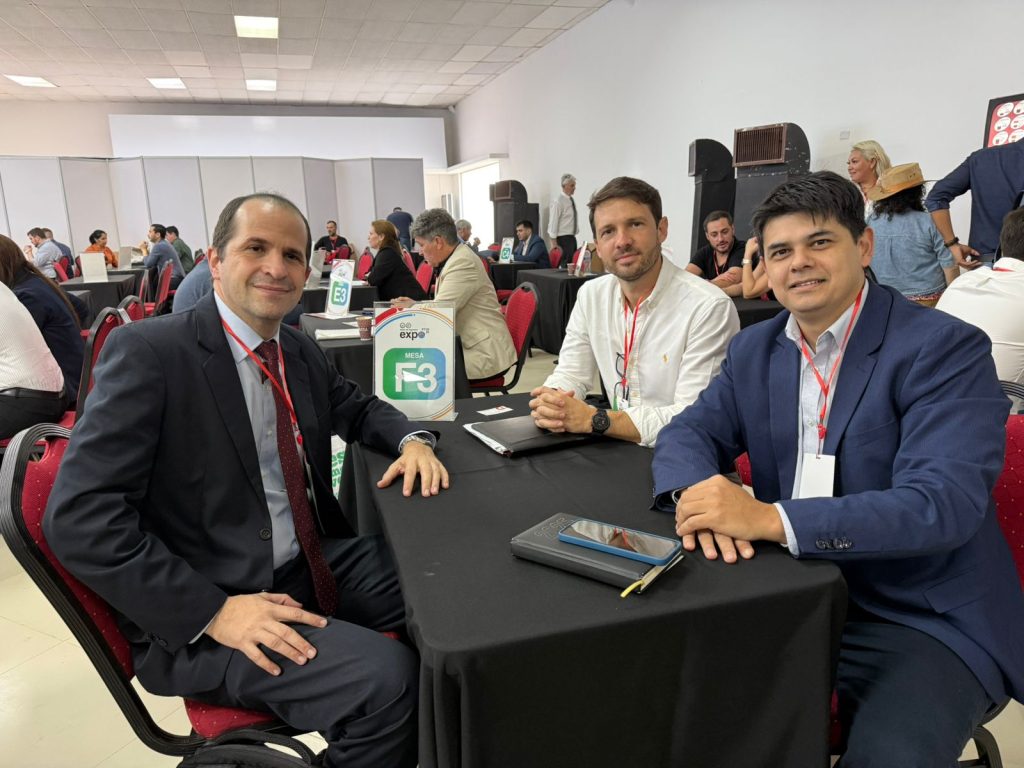
Yesterday, AVS & ASOCIADOS – Comprehensive Legal Services, actively participated in the Multisectoral Business Roundtable of EXPO PY 2025, held at the Convention Center. This international event brought together more than 500 companies and entrepreneurs from over 20 countries, solidifying its position as a true business networking platform. During the day, our team had the honor of presenting the legal, notarial, corporate and investment services we offer, generating valuable strategic alliances with key players in the productive, commercial, technological and service sectors. What did we achieve? We established high-value contacts with national and international businesspeople interested in investing and operating in Paraguay. We provide real-time advice on legal structures for foreign companies. We share concrete solutions in matters of migration, company formation, asset protection, intellectual property, regulatory compliance and notarial procedures. We are introducing our new Subscription Legal Services platform, designed to offer agile, personalized and strategic assistance to companies of all sizes. This meeting allowed us to create lasting ties and generate opportunities for multi-sector collaboration, reaffirming our commitment to providing legal certainty, facilitating business and promoting business development within and outside the country. If you are starting a business, expanding your business or investing in Paraguay, AVS & ASOCIADOS is your strategic partner.
AVS & ASOCIADOS & Argentine Embassy
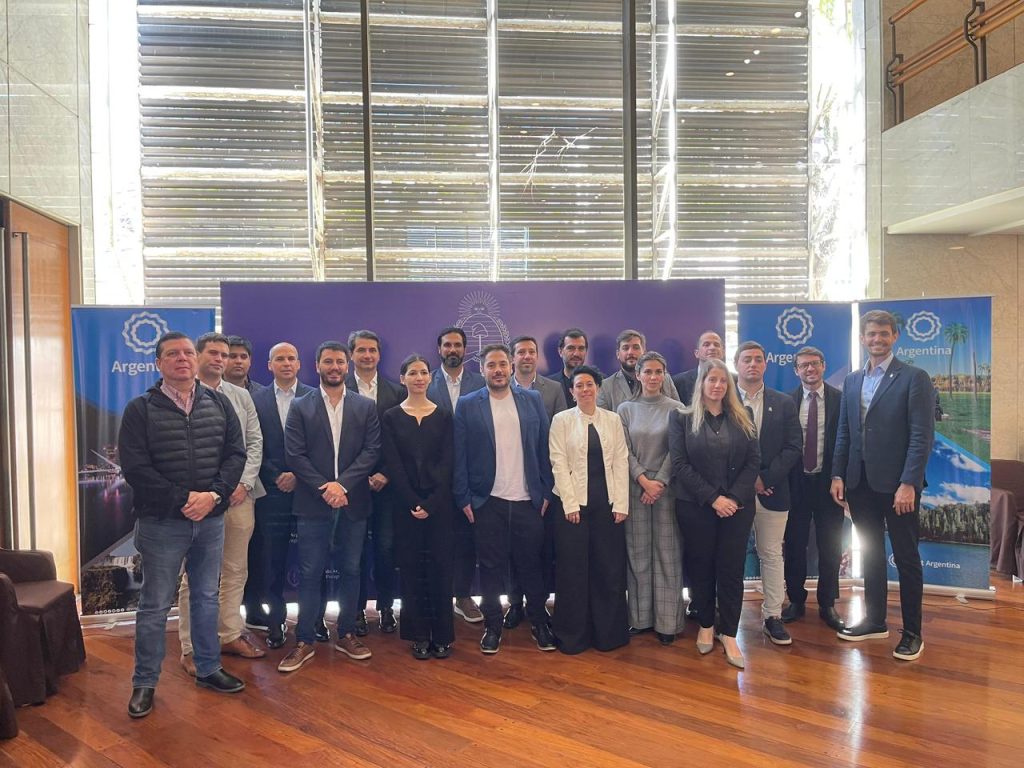
Last Wednesday, August 13, we had the honor of participating in the meeting organized by the Argentine Embassy in Paraguay, together with the Argentine Fintech Chamber and the Paraguayan Fintech Chamber. Attorney Manuel Sola Argaña was invited as a speaker to discuss the regulatory framework of the fintech sector in Paraguay and the main aspects to consider when establishing companies in the country. During the presentation, we shared with entrepreneurs, investors, and colleagues a practical look at the opportunities that Paraguay offers as a hub for financial and legal innovation. We thank the Argentine Embassy for the invitation, as well as all attendees for the valuable exchange of ideas.We will continue working on our commitment to providing legal certainty, transparency, and strategic support to those who place their trust in us. AVS & ASSOCIATES – Comprehensive Legal ServicesArgaña Notary Office – AVS IP Law
Korean Supreme Court accepts registration of generic word as trademark
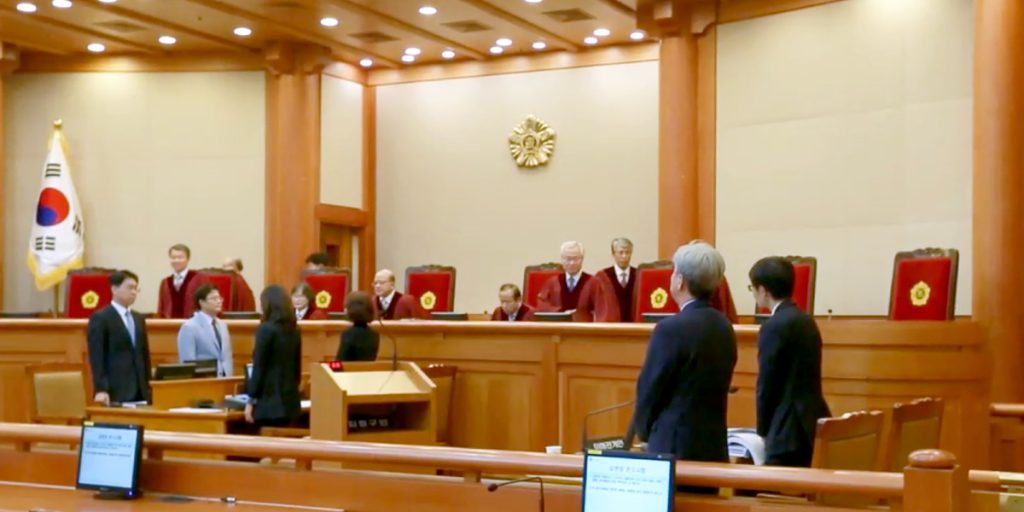
Today we celebrate World Intellectual Property Day, congratulations to all! For this reason, we want to share the following article with you: South Korea’s Supreme Court ruled that the word “Yangtangguk,” an archaic term for coffee in Korea, is valid for use as a coffee shop brand.This ruling comes after an appeal against the country’s Intellectual Property Appeals and Trials Board, which had determined that the use of this obsolete term as a trademark was invalid. As a result, a local coffee franchise that had registered the word as a trademark years ago was unable to use it freely.The word “Yangtangguk” translates to “Western soup” and was the noun for coffee from the late 14th to the early 20th century. The word also currently designates the “Yangtangguk Coffee Culture Center,” which recreates the coffee culture of the Korean Empire in Hadong Province and promotes other brands as part of a tourism campaign.The trademark was registered as an image, in Korean characters, by Mr. Kyoung Il Hong, a businessman who, shortly after registration, faced a challenge from a local coffee franchise. The franchise petitioned the Korean Intellectual Property Office to invalidate the trademark, arguing that yangtangguk, as a generic/noun term, could not be monopolized as a trademark by a single individual.Although Article 7 of the Korean Trademark Law of 2007 states that trademarks that could cause confusion with another person’s goods or services cannot be registered, given that they are recognized by consumers as designating a third party’s goods or services, the Supreme Court held that “it cannot be definitively stated that a consumer will perceive a particular product as the item representing the specific product (perceiving yangtangguk as coffee) simply because the product uses the previously used name.”The Court ruled that the invalidation was not warranted, as it found no clear evidence demonstrating that consumers would confuse the archaic term with the product. Furthermore, he insisted that the trademark cannot be invalidated because the modern consumer, upon hearing or reading the word “yangtangguk,” does not immediately think of coffee.This is, to date, the first decision in Korea to accept archaic and obsolete words as trademarks, as it does not consider the use of an antiquated noun as grounds for invalidating a trademark. This sets a precedent, contrary to many global legislations that prohibit the registration of generic words as trademarks unless they serve to prevent the establishment of monopolies, provided certain conditions are met, beginning with safeguarding the uniqueness of a product or service.In Paraguay, Law 1.294, the Trademark Law, states in Article 2, section “e” that signs consisting entirely of a generic name or designation of the product or service in question, or that could be used in commerce to qualify or describe any characteristic of the product or service, cannot be registered as trademarks. When an individual or company wishes to register a name of this nature, there are often several recommendations to consider.For more information, please contact us at info@avs.com.py
Paraguayan designation of origin
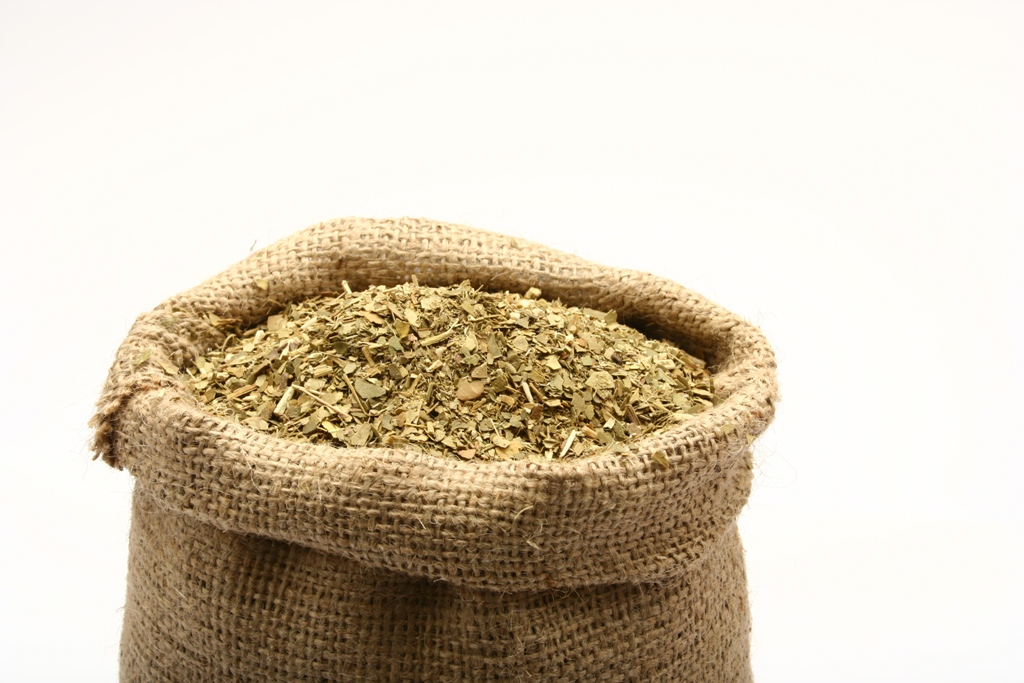
Our ancestral sweet herb, ka’a he’ê, will receive its designation of origin this Friday, August 10th , granted locally by the National Directorate of Intellectual Property (Dinapi). “It’s like giving a product a birth certificate, proving that it is Paraguayan,” said Juan Barboza , head of Capaste. Regarding the granting of this certification to Paraguayan stevia, Barboza noted: “Actually, this will be the first Paraguayan product with a designation of origin. We’ve been working on it for over six years, and now it’s finally going to happen.” When asked why it hadn’t been released sooner, the leader replied: “That’s the big question. But thanks to the patriotism of the current (interim) Minister of Agriculture and Livestock, Mario León , it will finally become a reality, because otherwise we could have waited many more years.” When asked about the implications of having this certification, the head of Capaste emphasized that a product with a designation of origin is recognized and has a distinct value in the international market because it inspires consumer confidence. “The multiplier effect for a product to have a designation of origin is enormous,” he stressed. Barboza highlighted that three years ago he was in Brussels (Belgium) to talk with the European Union authorities about this issue, and that the Europeans are waiting for ka’a he’ê to have its local designation of origin to be registered in the records of the relevant EU institution. CHARACTERISTICS Ka’a he’ê is a plant native to Paraguay that, in its early days, was only valued economically for its sweetening power: it is 300 times sweeter than cane sugar. Today, it is also used in agricultural production, which increases its market value and opens up a wider range of applications. It has been botanically classified as Stevia rebaudiana Bertoni . It is a plant native to Paraguay, where its natural habitat extends throughout the departments of Amambay, Alto Paraná, and other areas. It is fast-growing, herbaceous, and its life cycle tends to last for several years in its natural breeding environment.
What is a patent?
It is a concession granted by governments to the inventor, by which he acquires the right to prevent others, for a limited period, from manufacturing, using or selling the invention without his permission. When patent protection is granted, the invention becomes the property of the inventor, who, like any other form of property or commercial asset, can buy, sell, lease, or rent it. Patents are territorial rights: patents applied for in Paraguay will only grant rights to the holder in Paraguay and rights to prevent others from importing the patented products into that country. To be patentable, the invention must : Being new : meaning that it was never made public in any way, anywhere in the world, before the date the patent application was filed. It involves an inventive step : if compared to what is already known, it would not be obvious to someone with good knowledge and experience in the subject. Being capable of industrial application : an invention must be able to be manufactured or used in some type of industry. This means that the invention must take the practical form of an apparatus or device, a product such as a new material, or an industrial process or method of operation. An invention is not patentable if it is : A discovery. A scientific theory or mathematical method. An aesthetic, literary, dramatic or artistic creation. A scheme or method for performing a mental act, playing a game, or conducting business. The presentation of information or a computer program. If the invention involves more than these abstract aspects so that it has physical characteristics (such as a special device for playing a new game), then it may be patentable. Furthermore, it is not possible to obtain a patent for a plant variety, a method of treating the human or animal body through surgery or therapy, or a diagnostic method . Patent protection design : Home page : Just as a book has a title page, a patent has a home page with useful bibliographic details. Use two-letter country codes. A summary – (compiled by the applicant): This design is becoming increasingly standardized, but the information provided may vary from country to country. General information : US patents are likely to include a discussion of the “state of the art” with references to key patents, books, or journal articles. Problem: The nature of the problem is described. Description of the invention : explains the step of the invention and how it works. Claims : Numbered claims cover the legal aspects of the monopoly, with the first being the primary claim and subsequent dependent claims referring to earlier claims by describing the novelty of the invention. In a published application, the claims are merely an attempt to obtain protection, whereas the granted patent has the rights recognized by law. Illustrations : as many as necessary showing the invention. A search report , usually found on the front or back page, consists at a minimum of a list of patents or other documents that suggest at least some of the inventions are not novel. More detailed search reports would indicate which claims in the application were affected, the type of relevance, and the exact page and line numbers considered relevant in the cited document. Search reports can be valuable when assessing whether an invention is truly novel. There has been standardization in classification; almost all countries now use the International Patent Classification (IPC). What rights does a patent grant? A patent grants the right to prevent others from using your invention. Alternatively, you can choose to allow others to use it under agreed-upon terms. A patent also carries the right to take legal action against others who may be infringing the law and to claim damages. An inventor is not required to obtain a patent to put an invention into practice, but once the invention is made public, there is no protection against others using the invention, and you will not be able to obtain a patent. The Intellectual Property Office does not ensure that others do not copy a patented invention. It is up to the owner to take the necessary steps to ensure that an idea is not infringed. Once an idea is ‘granted’ or in the public domain, it cannot be re-registered. Confidentiality Any invention must be kept confidential until it is filed with the Intellectual Property Office of the country where it is being applied for. A confidentiality agreement must be signed before any details or descriptions are disclosed. This does not apply to patent attorneys or other professional advisors, or to staff assisting members of the public. This is automatically a confidentiality agreement.